


Short answer: Valve says it is aware of AI clones and low-quality Next Fest demos, but it has not announced new protections and will not gatekeep AI tools. Some studios, including Drunken Goddess Reflux’s publisher Alliance Arts and Moonlighter developer Digital Sun, have pulled public demos or playtests in favour of closed ones. Closed playtests, dated build records and an early community are the main defences developers are using right now.
On October 27, at the Steam Indie Connect event in Seoul, Valve’s Steam business team took questions from indie developers worried about AI slop and AI clones. Valve said it is “fully aware” of the problem, but it did not announce a fix.
What Valve Said About AI Clones and Slop
Tom Giardino from Steam, said clones existed long before AI and that AI has mainly sped them up. Valve does not want to tell developers which tools they can use. Its advice is to build a community and keep improving the game, which mirrors how Valve has long treated piracy: make the legitimate version the best version instead of relying on one mechanic that is easy to copy. On extortion emails that threaten to release an AI clone first, he called it a matter for law enforcement, but asked developers to report cases to Valve.
On Next Fest, Marc Wilkinson explained that games are shown to players at random for the first two days, and personalised recommendations take over after that. Valve accepts this lets some low-quality games through. One caveat: the remarks were interpreted into Korean and translated back, so coverage notes that the exact wording may differ from what was said.
What Indie Developers Are Seeing on Steam
The scale has changed. This October’s Next Fest listed roughly 8,200 demos, about double June’s event, and one count has about a fifth of them disclosing AI use.
Needle in a Haystack
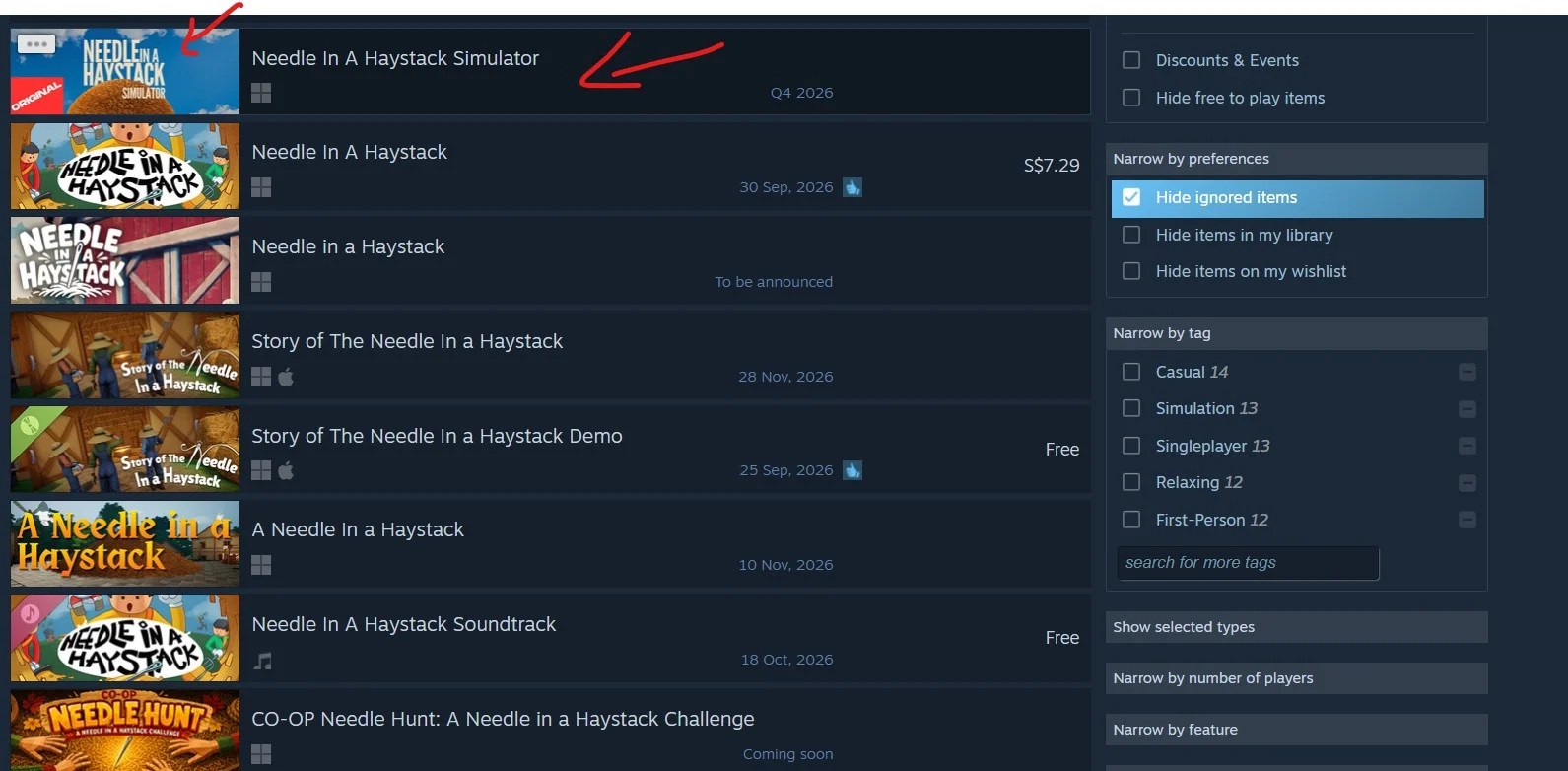
Needle in a Haystack Simulator is the clearest example. A clip of it passed 50 million views in August, and at least nine clones appeared within days. The original had to mark its own store art as the real one.
Later, the developer of one clone, NoGlyph, publicly accused another clone of copying its code and filed a copyright notice with Valve. That is a notice, not a lawsuit.
Kotaku points out that NoGlyph’s game does not appear to be vibe-coded, so not every clone is an AI clone. AI just makes cloning cheaper and faster.
Drunken Goddess Reflux and ReVamp: Demos and Playtests Pulled
Publisher Alliance Arts and developer WHO YOU cancelled the public Steam demo of Drunken Goddess Reflux, an anime Russian roulette drinking game, days before its planned October 19 Next Fest release. In its place they are running closed play sessions with players chosen by lottery.
They said work imitating the game’s presentation and gameplay could be quickly produced with AI and released before the original. They also cited difficulty managing video restrictions with a small team.
The game is still due on Steam on December 8 and has over 500,000 wishlists, according to KeenGamer, so this is not a team with nothing to lose. Whether AI could really build a convincing rival before December is an open question, but the fear was real enough to change their plans.
Digital Sun, the studio behind Moonlighter, made a similar call on October 19. It dropped the public Steam playtest planned for ReVamp, its Dracula-themed tower defense game, and moved the first test to a smaller group on its Discord starting October 29. ReVamp is planned for March 2027, and you can wishlist it on its Steam page.
The studio said it is worried about games being reverse-engineered, cloned and published before the original is out, and that a large public build felt “too big a risk” this far from launch. It hopes to open a public playtest around January.
Delayed Steam Pages and AI Clone Extortion Emails
Polish developer Rado Klasa says it happened to him. He built the concept for 1,000,000 Potatoes for the GMTK game jam and held back his Steam page to polish the mechanics. Then Golden Horn Studios’ Potato Please appeared with a very similar premise, and Klasa accused them on X of cloning it, “probably mostly with a simple AI prompt.”
Golden Horn denies it. The studio says it had not seen the other game and that similar concepts are not evidence of copying. This is an allegation, not a proven clone, but it shows how quickly a developer can feel the ground move under them.
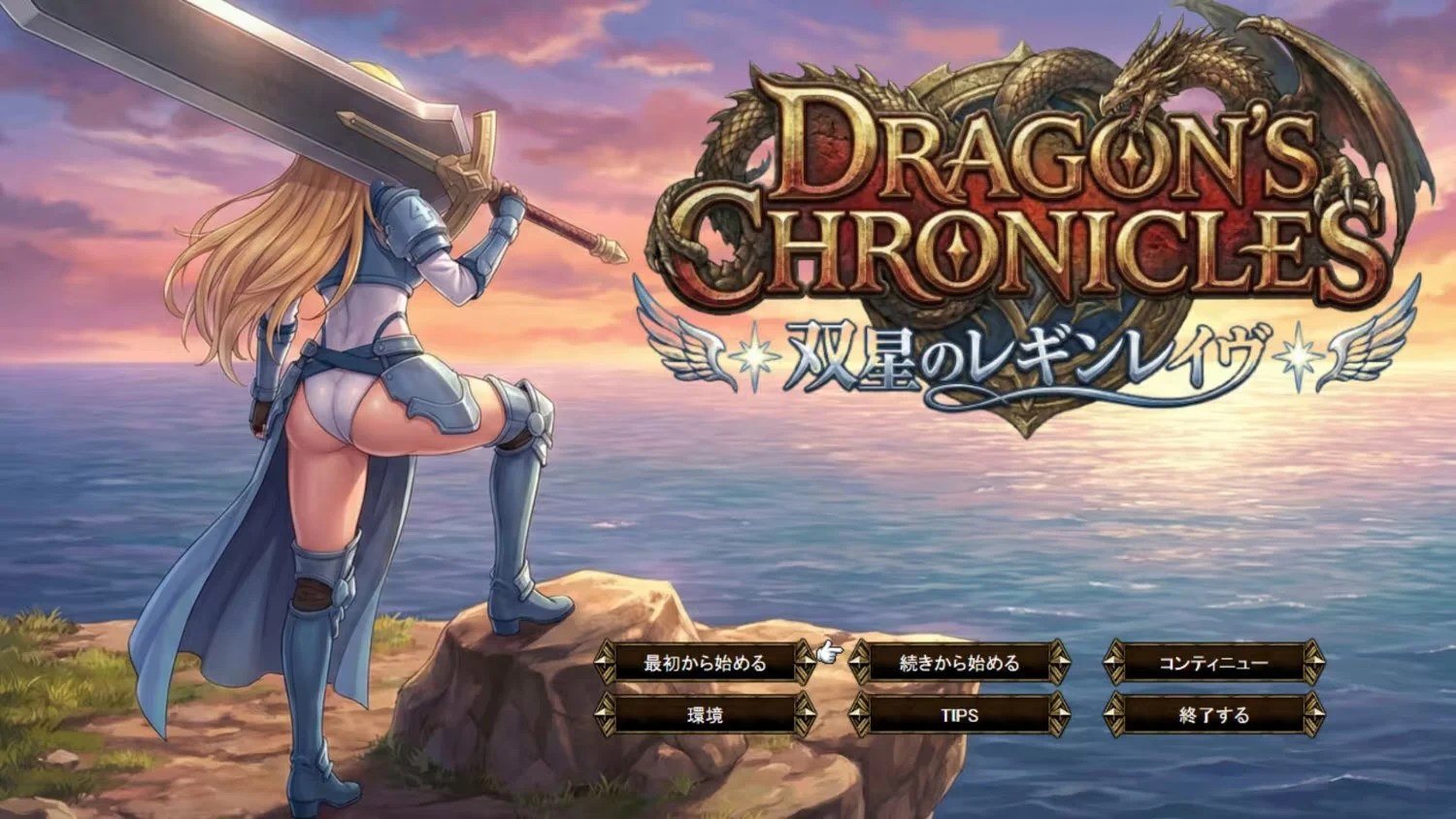
Japanese developer Takashi Mochibe of Studio Athome, who is making the strategy RPG Dragon’s Chronicles: Twin Stars of Reginleiv, shared an email on X demanding $200 in Steam items within 24 hours or an AI clone would be released first, according to TweakTown.
The promised proof video was never attached, and Mochibe suspected spam. The developers of Iron Pilgrim and Circusar received near-identical emails, and AUTOMATON found no reports of anyone paying. I would treat them as likely bluffs, though still a nasty tactic.
Building in Public After AI Cloning
The worry goes beyond demos. Lucas Pope, the creator of Papers, Please and Return of the Obra Dinn, said on a podcast in April that he has become more cautious about talking about what he is working on because it could get “slurped up by AI”. He also said he feels pressure not to let players down after the success of his first two games, so AI is not his only reason.
Still, when a developer with that track record stops sharing work in progress, it shows how much the culture of building in public is changing. I am not sure it is safe to share early anymore, and that is a loss, because sharing early is how many of us learn and get feedback.
Why Steam’s AI Disclosure Rules Do Not Stop Clones
Steam’s AI disclosure rules, introduced in 2024 and rewritten in January 2026, focus on generative AI content that players actually see. Coding assistants are exempt. That is a label for players, not a defence against someone copying a game’s ideas or code. GIGAZINE also reported that the policy is voluntary and not enforced by Valve’s moderation, and Epic’s Tim Sweeney has criticised the rule again.
My Take on AI Clones: Scary, but Optimistic
I find this scary, already Artcrafted got cloned by AI no matter how you look at it code was lifted even though its alpha this space is advancing fast.
Showing a demo used to be the best marketing a small team had. Now a demo can also be raw material for someone who wants to copy it, and I understand why developers are pulling back. AI is allowing a new kind of piracy, where you can clone a game and also remix its mechanics through code. Even though clones existed before in the asset flip era its the speed now.
I am still optimistic. The same tools let a solo developer build far more than was possible a few years ago, so more can be done, by more people. But I think we need guardrails. Valve says its staff are discussing the problem, yet nothing new has been announced, and leaving it to the algorithm and the market does not feel like enough. The guardrails I would like to see:
- A faster, clearer way to report copied code and lookalike store pages.
- An optional filter so players can hide AI-disclosed games when browsing Next Fest, something players are already asking for.
- Disclosure that players can actually see, instead of a note at the bottom of the page.
What Indie Devs Can Do About AI Clones
Build something that cannot be summed up as one mechanic: deep worldbuilding, a real community, deep mechanics. Needle in a Haystack is easy for AI to copy. I do not think Elden Ring or Ace Combat is. Also keep dated records of your builds and release dates, and report extortion attempts to both Valve and the police.
Cyber Secure Your Code Against AI Cloning
Hiding or obfuscating your code is the obvious technical step, but I am not sure how long it will keep working. I have bookmarked PreEmptive’s post on obfuscation for AI and have not tested the approach yet. Building your own store is another option, but it is harder now that buyers are trained to shop on platforms rather than individual sites.
How AI Cloning Could Change Indie Game Revenue
I feel software made with AI will trend towards free, like mobile games, unless it is a deep single-player experience. If AI can clone or reverse engineer a game, the money moves to what cannot be cloned: sponsors and community perks, much like YouTube. One-shot prompts and single mechanics are cheap and disposable, like short-form video, so the creative move is upstream.
FAQ: AI Clones and Indie Game Demos
Should indie developers still release a demo on Steam?
Nothing stops you, and Valve has not told developers to stop. But studios such as Alliance Arts and Digital Sun have moved to closed playtests because a public build could be used to imitate their game. The trade-off is less visibility, so it comes down to how easily your game could be copied from one mechanic or one hook.
Can AI really clone a game from its demo?
Developers say it can, and clones of Needle in a Haystack Simulator appeared within days of it going viral. Whether AI could build a convincing rival to a specific unreleased game before launch is still an open question, and not every clone is made with AI.
What has Valve said about AI clones?
At Steam Indie Connect in Seoul on October 27, Valve’s Steam team said clones existed before AI, that it will not gatekeep tools, and that it is aware of low-quality games at Next Fest. Its advice was to build a community and keep improving your game. It did not announce new clone protections.
What is a closed playtest and how do studios run one?
It is a playtest limited to a small group instead of a public Steam demo. Alliance Arts picks players by lottery through Discord and asks them to agree to rules on posting and streaming gameplay first. Digital Sun invites players in waves through a Playtests role on its Discord, starting October 29.
Are the “pay $200 or we will clone your game” emails real?
Several developers received near-identical emails, but the promised proof video was missing in at least one case and AUTOMATON found no reports of anyone paying. Treat them as likely bluffs, do not open attachments, and report them to Valve and the police.
Does Steam’s AI disclosure label protect my game from clones?
No. The label tells players when generative AI content ships in a game, and coding assistants are exempt. It is not a clone detector and does not stop someone copying your ideas or code.
Media for this topic
Sources and Further Reading
The sources behind this article, grouped by type. All dates are 2026 and were checked on October 29-30.
Valve and Steam
- Inven Global: Valve’s Q&A with developers at Steam Indie Connect, Seoul (October 27)
- Talk Esport: summary of Valve’s remarks, with the note that they were interpreted into Korean and translated back
- Chosun Biz (English edition): related Korean coverage
- VGC and GIGAZINE: Steam’s January 2026 AI disclosure rewrite
Studio and Developer Posts
- Alliance Arts, Drunken Goddess Reflux demo cancelled: post on X and Steam announcement (October 16)
- Digital Sun, ReVamp playtest moved to Discord: post on X, post on Bluesky and the ReVamp Steam page (October 19)
- Rado Klasa, 1,000,000 Potatoes: post on X and the Steam page; Golden Horn Studios’ Potato Please
News Reporting
- Next Fest numbers: Time Extension and gagadget
- Drunken Goddess Reflux: Kotaku, Prima Games, Magica and KeenGamer
- ReVamp: Kotaku and Game Developer
- Needle in a Haystack: Dexerto and Kotaku
- Potato Please dispute: Dexerto and WN Hub
- Extortion emails: TweakTown and AUTOMATON (in Japanese)
- Lucas Pope on sharing work in progress: VGC (April)
- Players asking for an AI filter: Braindetox; Epic’s Tim Sweeney on the disclosure rule: Notebookcheck
Community discussion: r/gamedev thread.

Leave a Reply